Sprunki Beat: Full Mod Music
- 4.7
- Rating
- 10.00M
- Installs
- Free
- Price

 Analysis by App-foxy
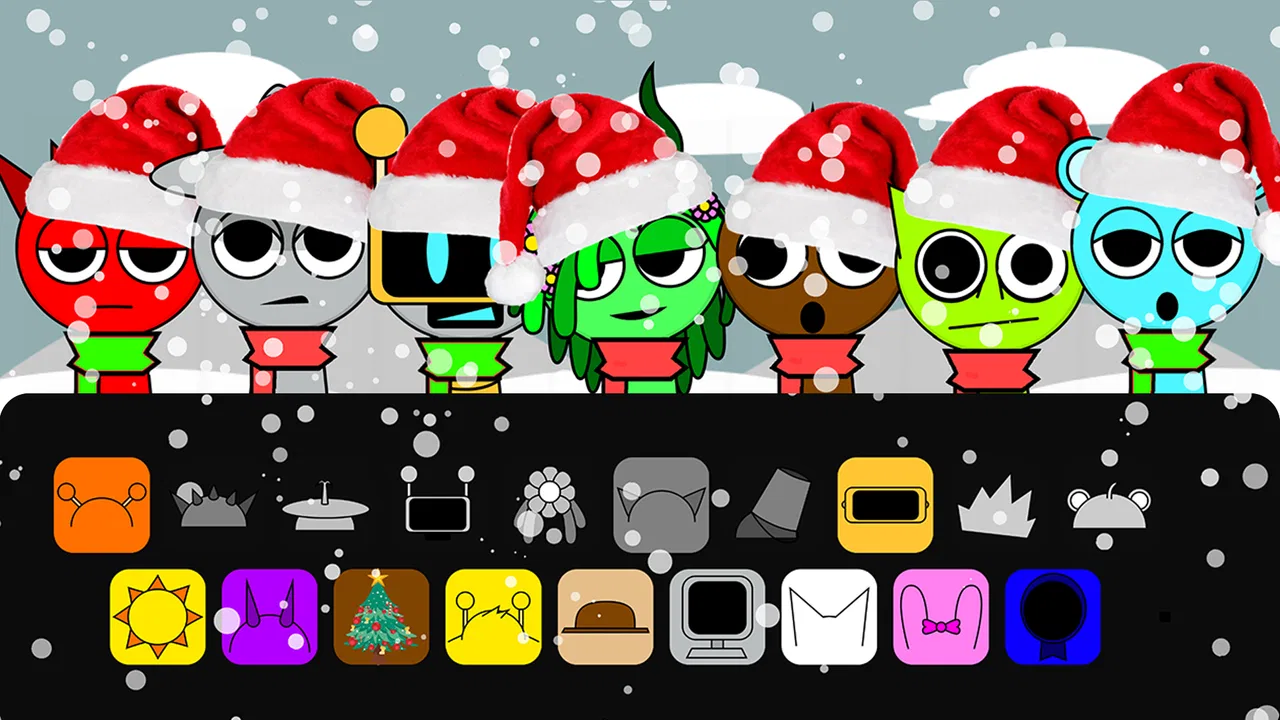
Sprunki Beat: Full Mod Music is the kind of music game that makes a strong first impression because it gets you creating something almost immediately. I found the appeal easy to understand: instead of asking me to master a complicated instrument or follow a long tutorial, it puts the focus on playful rhythm, familiar sounds, and the creative energy associated with Sprunki-style music. It is free to start, aimed at Teen players, and developed by Gotstar Studio, so it sits firmly in the casual entertainment space rather than trying to be a serious music-production tool.
After spending time with it, my opinion is more measured than the initial excitement. The first session is more memorable than the long-term routine, and that distinction matters here. The game is enjoyable when I want a quick burst of sound and experimentation, but its lasting value depends on whether I enjoy revisiting combinations after the novelty of discovering them has faded. For some players, that open-ended musical play will be enough. Others may feel that the experience needs more structure before it earns a permanent place on their phone.
What makes the first week so appealing
The best part of Sprunki Beat is how approachable it feels. I do not need musical training to understand the basic attraction. The game presents music as something I can assemble through choices, timing, and listening rather than something I must perform perfectly. That makes it a comfortable recommendation for someone who enjoys rhythm games but does not necessarily want demanding reflex challenges.
You May Also Like

 Blood Strike: 2.5 Anniversary
Blood Strike’s Loadouts Turn Every Drop Into a Tactical Gamble
A close look at Blood Strike’s custom loadouts: how fast access to signature weapons reshapes its battle royale rhythm, rewards preparation, and narrows the gap between fights.

 Pandora - Music & Podcasts
Pandora’s Music Is Easy to Start, but Harder to Recover
Pandora’s strength is its low-effort path from a seed to a station. Its weak spot is how much confidence it asks you to place in connection, setup, and quiet recovery.

 8 Ball Pool
 Is Built on Rivalries, Rematches, and Routine
A close look at the rivalries, rematches, shared routines, and unanswered safety questions that turn a quick pool match into a persistent mobile community.

 Samsung Music
’s Quiet Strength Is Playing What You Already Own
Its reach comes less from spectacle than from dependable access to a personal library. That simplicity is both the app’s strongest retention engine and its ceiling.

 AccuWeather: Weather Radar
AccuWeather Review: A Quick, Clear Forecast for Everyday Decisions
For everyday plans, the best forecast is the one you can understand quickly. AccuWeather makes rain timing, radar, and local conditions easy to act on, with a few trade-offs.

 Hill Climb Racing
Why Hill Climb Racing Still Turns Crashes Into One More Run
A tiny car, a bumpy hill and one more upgrade: Hill Climb Racing keeps resurfacing because its simple chaos makes every near-miss feel personal.
More From Our News Desk
View All News


Its music-focused design also gives it a different mood from the usual tap-to-the-beat games. Traditional rhythm titles often judge me against a track, with success depending on accuracy and speed. Here, the appeal is more about hearing what happens when I combine elements and deciding whether the result works for me. That shift makes the game feel less like a test and more like a small creative playground.
The connection to popular mods is an important part of the attraction. Players who already enjoy the wider Sprunki scene will probably recognize the style and understand why the game feels immediately familiar. Newcomers can still approach it as a colorful music toy, although they may not get the same satisfaction from references and variations that existing fans bring with them.
During the first week, I would use it in short sessions rather than expecting a long campaign. It works well when I have a few minutes to fill, want something lighter than a competitive game, or need a playful change of pace after work. A realistic use case is opening it while waiting for an appointment, trying a few musical combinations, and closing it before the session becomes repetitive. That short-session rhythm suits the game better than treating it like a main daily game.
One useful habit is to listen before changing everything at once. When I altered several parts together, it was harder to tell which choice improved or weakened the result. Making one change at a time gave me a clearer sense of the arrangement and helped turn random experimentation into a more deliberate process. That is a small distinction, but it makes the game more rewarding for anyone who wants more than a quick novelty.
The game is free, which lowers the barrier to trying it. There are in-app purchases priced at $3.99 per item, so I would approach the experience with the expectation that optional spending may become part of the decision for committed players. I would not recommend buying anything immediately. The sensible approach is to spend the first several sessions deciding whether the core loop still interests you once the initial surprise has passed.
On the technical side, the game supports Android 7.0 and later, which makes it accessible to people using older compatible devices. The current version is 0.2.8, and that version label is worth keeping in mind when judging the experience. It suggests a product that is still relatively early in its development rather than a fully settled, mature release. I would keep the app updated and expect the feel of the game to evolve over time.
A better way to explore the musical combinations
My most useful approach was to divide play into three phases. First, I listened to the starting arrangement without touching anything. Next, I tested one change at a time, paying attention to whether it added rhythm, contrast, or clutter. Finally, I removed elements instead of always adding new ones. That last step is easy to overlook, but restraint often produced a cleaner result than filling every available space.
This workflow also helps answer an important question: is the game offering creativity or merely random variation? For me, it offers a modest form of creativity. I am not composing a complete song from an empty timeline, but I am making choices about texture and mood within the boundaries the game provides. That is enough for casual experimentation, though it will not satisfy someone looking for detailed control over melody, recording, arrangement, or production.
I also found that playing with headphones changes the experience. The game is easier to appreciate when I can separate the layers and notice how each part affects the whole. In a noisy room, the combinations can blur together, making the activity feel flatter than it actually is. This is not a requirement for casual play, but it is a practical tip for anyone deciding whether the musical side has enough depth to keep returning.
What remains useful after the novelty fades
The real test for this game is not whether it entertains me during the first week. It is whether I still have a reason to open it several weeks later. Its long-term value comes mainly from experimentation, familiarity with the available mods, and the personal satisfaction of finding combinations that sound good to me. That is a valid kind of replay value, but it is less dependable than progression systems, competitive goals, or a steady stream of clearly defined challenges.
Players who enjoy self-directed activities may keep finding value in it. I can return with a different intention each time: making something energetic, trying a stranger combination, revisiting a favorite sound, or simply relaxing with familiar audio. The game does not need to become a daily habit to be worthwhile. It may work better as an occasional creative break that I revisit when I am in the mood.
That also explains why I would not compare it directly with a conventional rhythm game. If I want measurable improvement, score chasing, difficult charts, or a strong sense of progression, another music game will probably serve me better. If I want to experiment without pressure, Sprunki Beat has a more welcoming personality. The choice depends on whether I value performance or playfulness more.
The 4.7 average from around 84 thousand ratings and more than ten million installs show that the concept has reached a substantial audience. Those figures make it easier for me to take the game seriously as a popular casual experience, but popularity does not settle the question of personal longevity. A large audience may confirm that the initial idea connects with people; it does not guarantee that every player will keep returning after the first burst of curiosity.
For a family deciding whether to install it, the Teen content rating is relevant. I would not treat the game as automatically suitable for every younger child simply because it is colorful or musical. Parents should consider the rating alongside the child’s age and comfort with the game’s themes. For older teenagers and adults who already like mod-based music games, the fit is more obvious.
The strongest recurring use case is mood-based play. I can imagine opening it after a tiring day, spending a few minutes testing sounds, and stopping once I have found an arrangement that feels satisfying. It is not replacing a streaming service, a full music editor, or a structured rhythm challenge. Instead, it fills a smaller space: interactive listening with a creative twist.
Who is likely to keep it installed?
I would keep it installed if I enjoyed the act of trying combinations even when there was no reward beyond the sound itself. That kind of player can create a personal routine: explore one mod, save a mental note of what worked, return later, and compare the mood of a different arrangement. The game is especially suitable for people who like discovering small differences rather than completing a fixed checklist.
I would be less confident recommending it to someone who needs clear goals. Without a strong personal interest in experimentation, the same freedom that feels relaxing at first can begin to feel directionless. A player who asks, “What should I unlock next?” or “What is the next challenge?” may find the experience less compelling than a level-based rhythm title.
It is also not the right replacement for a real music-making app. The game gives me a playful way to interact with sound, but I would not choose it to record vocals, build a professional arrangement, edit a finished track, or learn music theory. Its strength is immediacy, not precision. Expecting it to function like a digital audio workstation would lead to disappointment.
Maintenance, friction, and reasons to take a break
The maintenance burden is relatively light in the practical sense: I can treat it as a quick game rather than a project that demands daily attention. The larger burden is mental. To keep it interesting, I have to bring my own reasons for returning. That means setting small creative goals instead of opening it automatically and expecting the game to supply endless direction.
My advice is to avoid turning every session into a search for a perfect arrangement. Perfection can make a playful game feel like work. I got more value by accepting unusual results and treating them as experiments. When a combination sounded messy, I learned more by removing one layer and trying again than by abandoning the session immediately.
There is also a practical spending decision. Since individual in-app purchases cost $3.99, I would wait until I had a clear reason to buy something rather than spending because the first session felt exciting. The free entry point gives enough opportunity to judge whether the core experience has staying power. For a game built around experimentation, purchasing more content only makes sense if I am still actively exploring what I already have.
Another source of friction is repetition. Music is highly personal, and the same sounds that feel catchy to one player may become tiring to another. Even when the combinations differ, the overall style can begin to feel familiar. I noticed that taking a few days away helped more than forcing myself to play every day. That makes the game better as an occasional companion than as a mandatory daily routine.
The early version status adds another consideration. Because the current release is 0.2.8, I would judge it as a work in progress and pay attention to updates before making a firm long-term commitment. That is not automatically negative; early games can improve quickly. It simply means I would avoid assuming that the current balance, selection, or presentation represents the final shape of the product.
Some players may also feel fatigue from the lack of a conventional endpoint. In a campaign game, finishing a chapter creates a natural stopping point. Here, the stopping point is personal. I close the game when I have heard enough or found a combination I like. That freedom is pleasant for relaxed play, but it can feel unsatisfying for anyone who relies on milestones to maintain interest.
How it compares with familiar alternatives
Compared with a standard rhythm game, this one is less demanding and less competitive. I do not approach it expecting to improve my reaction time or climb a leaderboard. Its advantage is that I can enjoy the musical identity without worrying about failure. The trade-off is that it offers less pressure to improve and therefore may provide less motivation over a long period.
Compared with a music-production app, it is faster to understand and much less intimidating. I can experiment without learning a complex interface, but I also give up the detailed control that serious creators need. Someone who wants to export a polished composition or manipulate individual musical properties should choose a dedicated tool instead.
Compared with simply listening to music, it adds participation. I am not only consuming a track; I am influencing the arrangement within the game’s boundaries. That extra interaction is the main reason to choose it over passive listening. However, if I only want a broad catalog and uninterrupted playback, a music service remains the more practical option.
Compared with other casual games, its appeal is calmer and more sensory. It does not need to dominate my attention in the same way as a puzzle or action game. I can play it while taking a short break and leave without feeling that I have interrupted a complex story. That makes it useful for a particular mood, even if it is not the most complete game on my device.
My long-term verdict
After the first-week excitement, I see Sprunki Beat as a pleasant specialist game rather than an essential all-purpose download. Gotstar Studio has built an accessible music experience with a recognizable mod-oriented identity, and the free price makes trying it easy. The high average rating and broad install base support the idea that many players enjoy its central concept.
My recommendation depends on what you want from a music game. Install it if you like Sprunki-inspired sounds, enjoy experimenting without strict scoring, and are comfortable creating your own reasons to return. Give it a chance if you want a low-pressure activity for short breaks and do not need a campaign or competitive ladder to stay interested.
I would skip it if you are looking for serious composition tools, demanding rhythm gameplay, or a carefully structured progression path. I would also avoid paying for extra items until the free experience has survived the novelty test. If I still wanted to explore after several separate sessions, spending could feel reasonable; if I had already stopped opening it, an in-app purchase would not solve the underlying issue.
For me, the lasting value is real but limited. This is best kept as an occasional creative break, not treated as a permanent daily obligation. I enjoyed the immediate sound-based experimentation, appreciated how quickly it communicates its idea, and liked that it did not require musical expertise. At the same time, I had to supply the long-term motivation myself, and repetition became noticeable when I played too often.
In the end, I would recommend Sprunki Beat: Full Mod Music to fans of casual music games and Sprunki-style mod culture, especially those who prefer playful discovery over precision challenges. It earns space on my phone when I want a quick interactive soundtrack, but it does not replace a deeper rhythm game or a full music editor. Its best future will depend on whether the early experience develops enough variety and direction to make returning feel as rewarding as discovering it for the first time.
FAQs for Sprunki Beat: Full Mod Music
01What is Sprunki Beat: Full Mod Music?
Sprunki Beat: Full Mod Music is a rhythm-based music game available for both Android and iOS. Players tap to the beat of various tracks while navigating through challenging levels. The game features a range of music genres and customizable mods, offering a dynamic and engaging gameplay experience.
02What are the main features of Sprunki Beat: Full Mod Music?
Sprunki Beat: Full Mod Music offers a diverse music library, customizable mods, and various difficulty levels to suit different player skills. The game includes vibrant graphics, smooth controls, and regular updates with new tracks. Players can also compete on leaderboards and share their scores with friends.
03Is Sprunki Beat: Full Mod Music free to play?
Yes, Sprunki Beat: Full Mod Music is free to download and play. However, the game offers in-app purchases for additional content, such as exclusive tracks and cosmetic enhancements. These purchases are optional and not necessary to enjoy the core gameplay experience.
04Does Sprunki Beat: Full Mod Music require an internet connection?
Sprunki Beat: Full Mod Music can be played offline, making it accessible even without an internet connection. However, an internet connection is needed to access certain features like leaderboards, updates, and in-app purchases. Playing online also enhances the social aspect of the game.
05What devices are compatible with Sprunki Beat: Full Mod Music?
Sprunki Beat: Full Mod Music is compatible with most Android and iOS devices. It requires Android version 5.0 or higher and iOS version 10.0 or later. The game is optimized for both smartphones and tablets, ensuring a seamless experience across different screen sizes.
Pros
- Engaging music beats enhance gameplay.
- User-friendly interface for easy navigation.
- Frequent updates with new tracks.
- Customizable characters and themes.
- Offline mode available for play anywhere.
Cons
- Limited free content; in-app purchases needed.
- Occasional lag on older devices.
- High battery consumption during play.
- Requires constant internet for some features.
- Ads can interrupt gameplay frequently.

Sprunki Beat: Full Mod Music
Gallery